

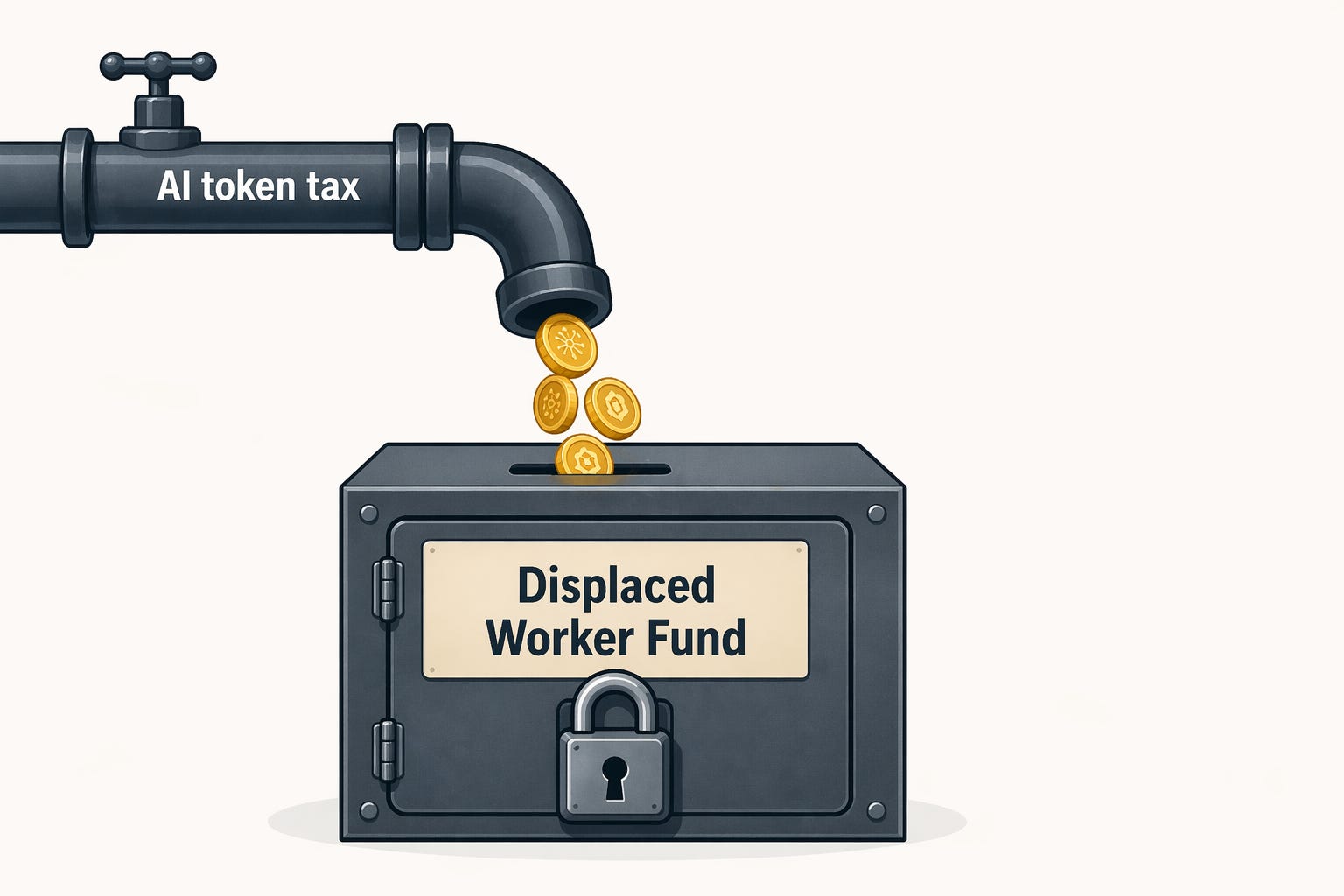
Large AI risks abound, including a massive wave of coming job displacement that will upend the lives of millions of people. Even if new AI jobs are ultimately created such that net job loss is minimal, many of the people who are displaced are unlikely to be the same people to get these new jobs, and the new jobs are unlikely to be created at exactly the same time the old jobs are lost. In other words, millions of displaced people will need our support, for example, to receive extended unemployment benefits while they retrain and look for new work. This support will cost real money. Meanwhile, the leading AI companies are already generating billions in revenue, with no signs of slowing down.
There are many proposals that would pair a so-called “token tax” on AI usage with support for displaced workers. Every one I've seen, though, specifies disbursement mechanisms up front, such as direct payments based on specific triggers. But what shape that support should optimally take remains genuinely uncertain: the peak of displacement hasn't been reached, and we don't yet know which industries will be hit hardest, or on what timelines. Instead of trying to work any of this out up front, we can decouple the collection of the tax from how funds would be disbursed.
We should start collecting an AI token tax now, and figure out exactly what to do with the funds later, holding them in a true lockbox outside general appropriations, with statutory protection limiting use of funds to supporting displaced workers in the future. We’d (at DuckDuckGo) be willing to support bills to this effect and ultimately pay a token tax, presumably collected by the leading AI companies on a usage basis, for example a 10% surcharge on token charges. That amount would roughly match the 10% employers pay in payroll taxes, which also further reduces the incentive to replace human workers with AI workers.